
The Unsung Heroes
Lifeline was the first telephone crisis support service established in Australia in 1963 by Wesley Methodist Minister Rev. Alan Walker.
In the vestry of Balgowlah Uniting Church holds a piece of history that I often think about.
Inside it sits a mahogany desk and a dial-up telephone. Before I became Moderator, I served there as Minister. That modest room housed one of the first Lifeline offices in the country. Lifeline was the first telephone crisis support service established in Australia in 1963 by Wesley Methodist Minister Rev. Alan Walker.
I imagined the first volunteers who answered those calls. What courage it must have taken to pick up that receiver, wondering whether they were equipped to help these people in their darkest hours. Did they fear saying the wrong thing? Did they question whether their words could possibly make a difference to someone standing at the edge of hopelessness and suicide? Yet, despite their fears, they picked up, one conversation at a time.
Today, Lifeline receives more than 2.6 million requests for support each year. These volunteers have saved countless lives. Unsung heroes quietly transforming their communities.
The Gospel story of the feeding of the five thousand reminds us of this truth. The miracle of the multiplication of bread and fish started with a spark of generosity by one young boy offering five loaves and two fish amidst the starving masses. Like the volunteer taking the call, the boy surely knew he wasn’t going to save everyone, but he knew he couldn’t look away.
Decades after those first Lifeline volunteers answered calls in Balgowlah, a crisis of epic proportions emerged on the streets of Sydney’s Kings Cross. A heroin epidemic was devastating and destroying lives.
Among those responding and witnessing the endless suffering were the Sisters of Charity - a group of nuns operating in near-by St Vincent’s hospital. They considered something controversial at the time: a medically supervised injecting clinic.
Many rejected the idea outright on moral grounds, including The Vatican, arguing it would encourage drug use. But those advocating for change had seen too much pain to accept inaction. Among those advocates stood Rev. Harry Herbert who consistently argued that the preservation of life, far outweighed being still. The advocacy was taken forward by the Uniting Church and through Uniting Care NSW/ACT Australia’s first Medically Supervised Injecting Clinic (MSIC) was established. This year, MSIC marks 25 years of service. Over that time, staff have managed more than 12,000 overdoses with zero fatalities onsite.
Thanks to the tireless work of thousands of individuals behind the scenes, what was touted as impossible was made a reality. Daughters, mothers, friends, brothers saved; families resuscitated and given a chance at recovery and reconciliation.
The same spirit lived in the work of the late Rev Dr Jione Havea - the Prophet of the Pacific -as he came to be known, through the countless voices and tributes across the Pacific, and the world. Jione’s theology challenged the Church to see beyond colonial assumptions and inherited Western frameworks. Jione reminded us that God was not carried to the Pacific on wooden ships by colonisers and missionaries, but was already present within the people, the land, the ocean - the moana itself.
Like many transformative scholars, Jione’s work was not always loud or headline-grabbing, it was quiet, unapologetic and powerful. Through classrooms, conversations, books, sermons and patient persistence over decades, his ideas deeply reshaped communities and ideologies.
Our society is surrounded by people just like those I have mentioned doing good things every day for the greater good. Students marching for climate justice, volunteers preparing meals for the vulnerable, prison chaplains sitting alongside those society has discarded, advocates supporting refugees, and community organisers sustaining difficult campaigns long after public attention has moved elsewhere.
All these individuals do not stand above the crowd and expect to be lauded for their good deeds. They do something much more extraordinary - they create the crowd to laud for the greater good.
The feeding of the five thousand reminds us that the Kingdom of God is often revealed not through domination or recognition, but through willingness. Through people bringing what they have, however insufficient it may feel, and trusting that God can do something meaningful with it when placed in collective hands.
A child with five loaves and two fish. Volunteers answering a telephone in a small church office. Nuns refusing to ignore the realities of addiction and overdose. A Tongan theologian challenging the Church to see the Gospel through the eyes of the Pacific.
None changed the world alone.
Perhaps, a fitting note to end on is a quote from UNITING CHURCH STUDIES VOL. 27. NO.2, DECEMBER 2025, written by the late Rev. Dr. Jione Havea and myself, Faa’imata Havea Hiliau, “Transforming Communities: talanoa and food as catalysts”:
“In Pasifika minds, everyone has something. No matter how small – like the loaves and fish in the Matthean stories – no one is empty-handed. Many do not have a pig or a mat to contribute, but they have something – like a piece of firewood, a mature coconut, one or a pair of strong hands (to help with cooking), the spirit of willingness to be present and to relate, and a few talanoa – which they can contribute to the umu. The Matthean stories affirm that no matter how small, everyone can contribute, participate, and share in family and village events.”
Melino moe ‘Ofa / Peace and Love

Inside the Medically Supervised Injection Centre at Kings Cross. Photo: Uniting MSIC.
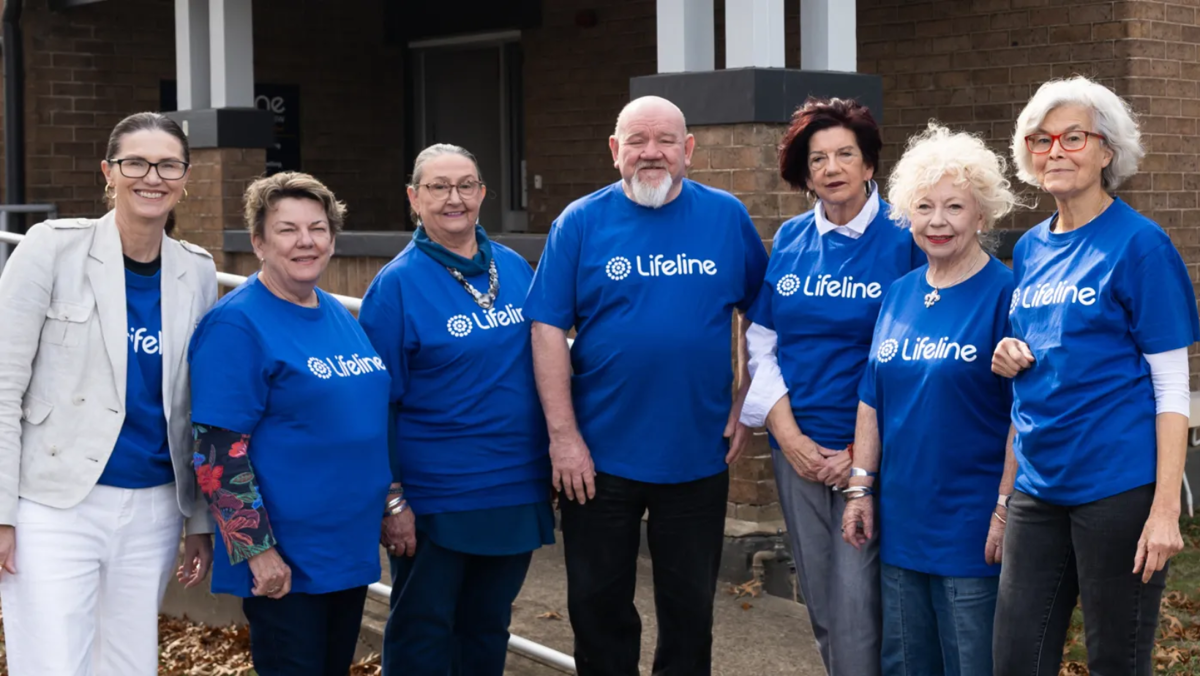
Some of our wonderful Lifeline volunteers. Photo: lifeline.org.au
Everyday Heroes: Ordinary People. Extraordinary Contribution.
This story is part of the upcoming Winter edition of Insights Magazine, themed Everyday Heroes: Ordinary People. Extraordinary Contribution.
The edition celebrates the quiet, tireless work of people across our Uniting Church communities who show up, give generously, and rarely seek recognition for it. It will be released in the second week of June and delivered to congregations across NSW and the ACT.
It will also be released online here in early June. Stay tuned!